
2026-07-16
What Hand Does a Wedding Ring Go On?
By Julian Jewelry
A wedding ring may be small, but it represents commitment, partnership, and the promise to build a life together. One question, however, appears before almost every wedding: what hand does the wedding ring go on?
In the United States, the United Kingdom, Canada, Australia, and many other Western countries, the wedding ring is usually worn on the fourth finger of the left hand. In parts of Europe, Asia, South America, and the Middle East, couples may wear it on the right hand instead.
There is no universal rule. Ring placement can depend on culture, religion, family tradition, comfort, and personal style. Some people wear their engagement ring and wedding band together, while others separate them between two hands or wear only the wedding band after marriage.
This Julian Jewelry guide explains the traditional wedding ring finger, cultural differences, engagement ring placement, and the most popular ways men and women wear their rings.

The Tradition of the Ring Finger
The fourth finger is commonly called the ring finger because it has long been connected with love and marriage. In Western cultures, this usually means the finger between the middle finger and little finger on the left hand.
A popular romantic story says ancient people believed a special vein ran from the left ring finger directly to the heart. This idea is often known as the “vein of love.” Modern anatomy does not support the existence of one unique vein belonging to this finger, but the story helped turn the left ring finger into a lasting symbol of romance.
The circular shape of a ring can also represent unity, continuity, and enduring love. Yet wedding traditions developed differently around the world, so the answer to what hand does the wedding ring go on is not the same in every country.
What Hand Does a Wedding Ring Go On?
In many English-speaking countries, the standard answer is the left hand. The wedding ring is placed on the fourth finger, known as the left ring finger.
This tradition is common in the United States, the United Kingdom, Canada, Australia, New Zealand, Ireland, France, and Italy.
In these places, the engagement ring is generally worn on the left ring finger before the wedding. During the ceremony, the wedding band is placed on the same finger. Afterward, both rings are often worn together.
The left hand is not the only accepted choice. In several countries and religious communities, the wedding ring is traditionally worn on the right hand. Couples may also choose a different placement because of comfort, work, or personal meaning.
Western Cultures: Wedding Ring on the Left Hand
The left-hand custom is strongly associated with weddings in the United States and other Western countries.
For women, the engagement ring is usually worn on the left ring finger during the engagement. After the wedding, the wedding band is commonly placed closer to the base of the finger, with the engagement ring above it.
For men, the wedding band is normally placed on the left ring finger during the ceremony. Although men have not traditionally worn engagement rings in many Western cultures, men’s engagement rings are becoming more common.
Therefore, searches such as which hand wedding ring female and which hand wedding ring male usually have the same answer in the United States: the fourth finger of the left hand.
This is still a custom rather than a law. A left-handed person may prefer the right hand to reduce scratching. A musician, athlete, craftsperson, or healthcare worker may remove the ring during certain activities. Some couples simply choose the hand that feels most comfortable.
Eastern and European Cultures: Wedding Ring on the Right Hand
In a number of countries, the right hand is the traditional wedding ring hand. This practice can be found in parts of Central and Eastern Europe, the Balkans, Asia, and South America.
Right-hand wedding rings are common in countries and regions including Germany, Austria, Poland, Russia, Greece, Norway, Denmark, Bulgaria, Serbia, Ukraine, and parts of India.
In some traditions, the right hand represents strength, honor, authority, or a sacred promise. In others, the custom simply developed differently from the Western left-hand tradition.
Ring placement may also change during the relationship. An engagement ring may be worn on one hand before marriage and moved to the other after the ceremony.
Traditions can vary within the same country, so family custom, religion, and personal preference may be more important than a general rule.
Other Global Practices
Wedding customs are not limited to one hand or one ring style. Some couples wear matching wedding bands, while others choose designs that complement one another without being identical.
Certain cultures favor gold, while modern couples may choose silver, platinum, mixed metals, gemstones, engraving, or family heirlooms. In some communities, only one partner traditionally wears a wedding ring. In others, both partners do.
Some people use a simpler band for work or travel and keep the main ring for special occasions. The wedding ring is meaningful because of the promise it represents, not because every couple follows the same rule.
What Hand Does an Engagement Ring Go On?
In the United States and many Western countries, the engagement ring is typically worn on the fourth finger of the left hand. This is the same finger that later holds the wedding band.
During the engagement, the engagement ring usually sits alone. After marriage, the wearer may add a wedding band below it, above it, or on another hand.
In countries where wedding rings are worn on the right hand, the engagement ring may also appear on the right. In some cultures, it starts on one hand and moves after the wedding.
An engagement ring does not have to be worn on the ring finger. Some people choose the right hand because they already wear a family ring on the left. Others select a different finger because of comfort, work, or personal style.
Couples with nontraditional proposals may create their own customs. One partner may wear an engagement ring, both may wear rings, or neither may follow the traditional pattern. At Julian Jewelry, we believe the best placement is the one that feels true to your relationship.
Engagement Ring Finger vs. Wedding Ring Finger
The engagement ring and wedding ring often share the same finger, but they represent different stages of a relationship.
An engagement ring is usually given during a proposal and symbolizes the intention to marry. It may feature a solitaire stone, halo, cluster, decorative band, or another statement design.
A wedding ring is exchanged during the wedding ceremony and represents the marriage itself. It is often a band, although wedding bands can include diamonds, moissanite, engraving, texture, or curved details.
When both rings are worn together, many people place the wedding band closest to the base of the finger and the engagement ring above it. This is sometimes described as keeping the wedding band closer to the heart.
Others reverse the order because the engagement ring fits more securely near the base of the finger. Some add a second wedding or anniversary band above the engagement ring to create a balanced stack.
There is no incorrect order as long as the rings fit safely and comfortably.
How to Wear an Engagement Ring and Wedding Band
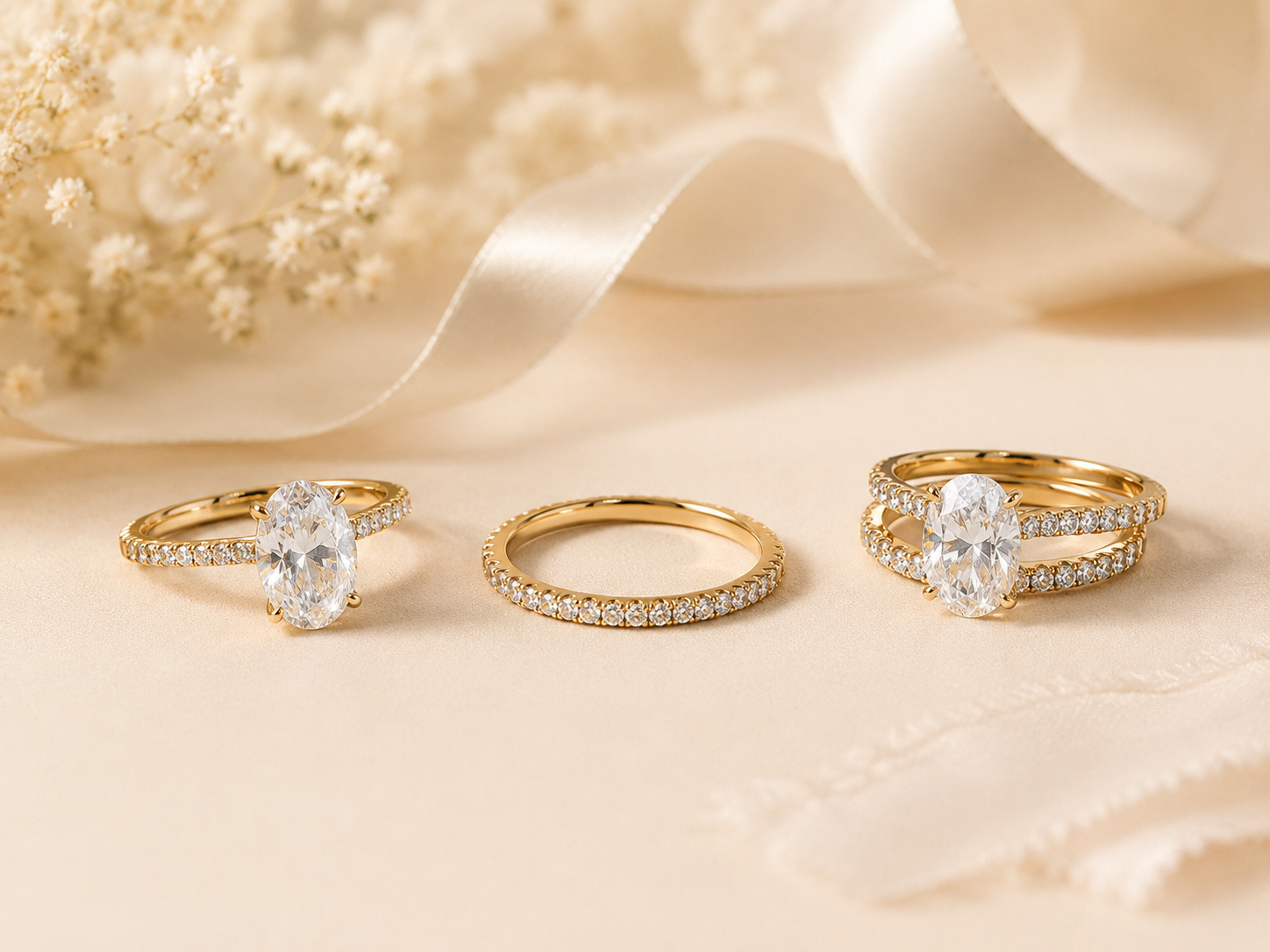
After the ceremony, there are several common ways to wear your rings.
Traditional Style
The traditional arrangement is:
- Wedding band closest to the base of the finger
- Engagement ring placed above it
This style creates a clear visual connection between the rings and follows the symbolic idea that the wedding band should sit closest to the heart.
A straight wedding band often fits neatly beside an engagement ring with a raised setting. If the engagement ring has a low setting or an unusual shape, you may need a curved, contoured, or custom-fitted band.
Reversed Style
In a reversed stack, the engagement ring is worn closer to the hand and the wedding band sits above it.
This may be more comfortable if the engagement ring rests naturally at the base of the finger. The wedding band can also help prevent a loose engagement ring from sliding off.
Although this arrangement is less traditional in some places, it does not change the meaning of either ring.
Opposite-Hand Style
Some married people keep the wedding band on the traditional wedding ring finger and move the engagement ring to the opposite hand.
This works well when the rings do not fit together, the stack feels too heavy, or the wearer wants each ring to stand out. It also keeps the wedding band simple and practical.
Wedding Band Only
Many people wear only their wedding band every day and save the engagement ring for weekends, celebrations, or formal occasions.
A wedding band is often easier to wear during work, travel, exercise, or household tasks. The engagement ring does not become less meaningful simply because it is not worn every day.
Anniversary Ring Stack
A wedding ring set may grow over time. Couples sometimes add an anniversary band, eternity ring, birthstone ring, or another symbolic piece.
The new ring may sit above the engagement ring, below the wedding band, or on the opposite hand. Make sure the pieces do not rub in a way that damages stones or metal.
Should You Wear Your Engagement Ring Down the Aisle?
Many brides and engaged partners wonder what to do with the engagement ring during the ceremony.
A traditional option is to move it to the right hand before walking down the aisle. This leaves the left ring finger open so the wedding band can be placed directly onto it. After the ceremony, the engagement ring can be moved back and placed above the band.
Another option is to keep the engagement ring on the left finger. The wedding band can be placed above it during the ceremony and rearranged afterward.
Some people leave the engagement ring with a trusted friend or family member. Others wear it exactly as usual.
Choose the method that causes the least stress. Practice removing the ring before the wedding, especially if your fingers tend to swell in warm weather.
What Do You Do with Your Engagement Ring After Marriage?
After marriage, you can continue wearing the engagement ring every day, move it to the right hand, or save it for special occasions.
Common choices include wearing both rings together, using only the wedding band daily, alternating between them, or placing the engagement ring on a necklace during work. Many people continue wearing it for life because it represents the proposal.
There is no wedding rule requiring you to stop wearing an engagement ring after the ceremony. The engagement ring and wedding ring simply represent different parts of the same relationship.
Which Hand Wedding Ring Female?
For the keyword question which hand wedding ring female, the most common answer in the United States, Canada, the United Kingdom, and Australia is the left hand. A married woman usually wears her wedding ring on the fourth finger of her left hand.
Her engagement ring may be worn on the same finger, normally above the wedding band. However, she may choose the right hand because of culture, religion, profession, comfort, or personal preference.
She may also wear only the wedding band, move the engagement ring to the right hand, or add an anniversary ring. The correct choice is the one that suits her lifestyle.
A woman who works with her hands may prefer a narrow, smooth wedding ring without raised stones. Someone who wants a more decorative style may combine her engagement ring with a diamond, moissanite, or contoured wedding band.
The size and shape of the engagement ring should also be considered. A large center stone or low-profile setting may prevent a straight wedding ring from sitting flush against it.
Which Hand Wedding Ring Male?
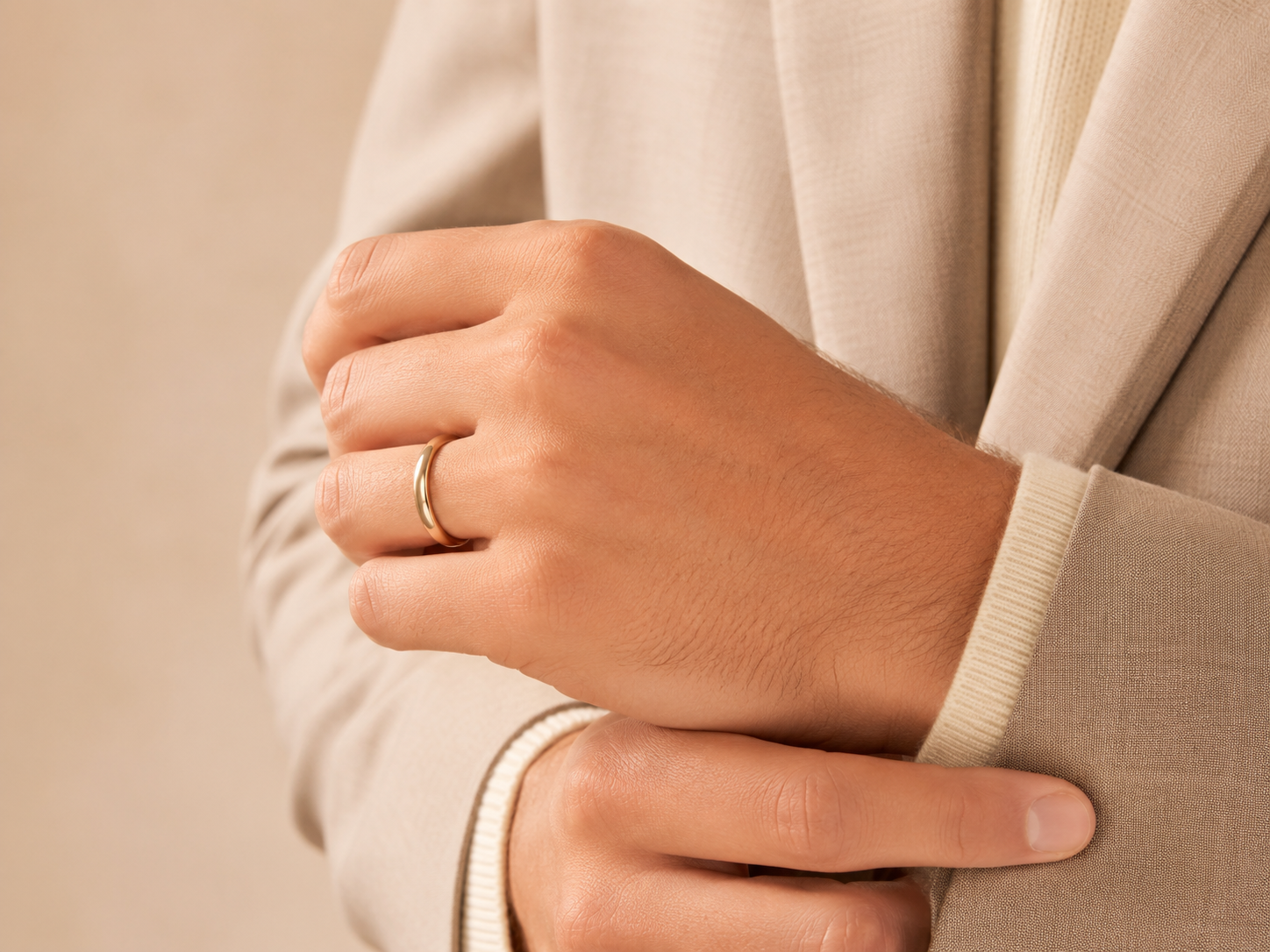
For the question which hand wedding ring male, the answer is also usually the left hand in the United States and many Western countries. A married man commonly wears a wedding band on the fourth finger of his left hand.
In countries with right-hand wedding traditions, men may wear the band on the fourth finger of the right hand.
Men’s wedding rings can be polished, brushed, hammered, engraved, or two-tone. Comfort matters, especially for a ring worn every day. Men working with machinery, electricity, or heavy tools may need to remove it for safety.
Band width is another important consideration. A wider ring can create a bolder appearance, but it may feel tighter than a narrow band in the same size. Trying several widths before purchasing can help determine which wedding ring feels most comfortable.
Men can also wear engagement rings. Although this practice is less traditional in some countries, there is no rule limiting engagement rings to women.
Who Wears Engagement Rings and Wedding Rings?
Traditional wedding customs often show a woman receiving an engagement ring and both partners exchanging wedding bands. Modern relationships are more flexible.
Women may propose to men. Men may wear engagement rings. Both partners may wear engagement rings, or a couple may skip engagement rings and purchase wedding bands only.
Same-sex couples may choose matching, complementary, or completely different designs. The meaning comes from the agreement between the people wearing the rings; tradition can inspire the decision without controlling it.
Some couples choose matching metals but different widths. Others select completely different styles that reflect each person’s taste. One partner might prefer a simple polished band, while the other chooses a detailed ring with gemstones or engraving.
A matching set is optional. Wedding rings do not need to look identical to represent the same commitment.
Can You Wear a Wedding Ring on Any Finger?
Yes. A wedding ring can be worn on any finger that feels comfortable and meaningful.
A person may move a ring because of injury, swelling, pregnancy, skin sensitivity, or work safety. Before resizing a valuable ring, speak with a jeweler because eternity bands, engravings, and some plated designs can be difficult to alter.
Some people wear their wedding ring on a chain around their neck. This can be a practical option for people who cannot wear hand jewelry at work.
Others permanently move the ring from the left hand to the right hand after an injury or lifestyle change. The placement does not remove its meaning.
How to Choose the Best Wedding Ring Placement
Consider culture, comfort, daily work, ring design, and personal meaning.
Your family may follow a specific hand tradition. Your dominant hand may experience more impact. A large engagement ring may need a curved band or separate-hand arrangement. Your job may also make certain rings difficult or unsafe to wear.
Try your ring on both hands and choose the placement that feels natural. Remember that the same finger can have a slightly different size on each hand.
You should also consider how the ring fits throughout the day. Fingers may become larger in warm weather, after exercise, or during travel. A properly fitted ring should feel secure without cutting into the skin.
Tradition can guide the decision, but comfort and meaning should come first.
Frequently Asked Questions
What hand does the wedding ring go on in the United States?
In the United States, the wedding ring usually goes on the fourth finger of the left hand.
What hand does a wedding ring go on for a woman?
In many Western cultures, a woman wears it on her left ring finger. In other cultures, she may use the right hand.
What hand does a wedding ring go on for a man?
In the United States, the United Kingdom, Canada, and Australia, a man commonly wears his wedding band on the left ring finger. In right-hand traditions, he may use the right.
Can I wear my wedding ring on my right hand?
Yes. You can wear it on your right hand for cultural, religious, practical, or personal reasons.
Which ring goes on first?
Traditionally, the wedding band goes on first, followed by the engagement ring. You may reverse the order if it feels more comfortable.
Can an engagement ring and wedding ring be worn on different hands?
Yes. Many people keep the wedding band on the traditional ring finger and move the engagement ring to the opposite hand.
Do engagement and wedding rings need to match?
No. They can use the same metal or design, but they may also be completely different. Comfort and personal style are more important than having an identical set.
Bottom Line
So, what hand does the wedding ring go on? In the United States and many Western countries, the traditional answer is the fourth finger of the left hand. In other parts of the world, the right ring finger is equally traditional.
You can wear your engagement ring and wedding band together, reverse their order, place them on opposite hands, or wear only one ring at a time.
Whether you are researching which hand wedding ring female, which hand wedding ring male, or how to arrange a complete bridal stack, remember that tradition is a guide rather than a restriction.
A wedding ring should feel comfortable, reflect your relationship, and suit the way you live. At Julian Jewelry, we believe the most meaningful ring is not defined only by the hand or finger on which it is worn, but by the promise and story behind it.
Keep reading
Related articles
2026-07-13
Cartier vs Tiffany vs Van Cleef: Which One Should You Buy?
Cartier, Tiffany & Co. and Van Cleef & Arpels are three of the most recognizable names in luxury jewelry
2026-07-11
Meaning of Birthstone Jewelry
Discover birthstone jewelry by month, including each gemstone’s color, meaning, symbolism, and the best necklaces, rings, bracelets, and earrings to choose
2026-07-11
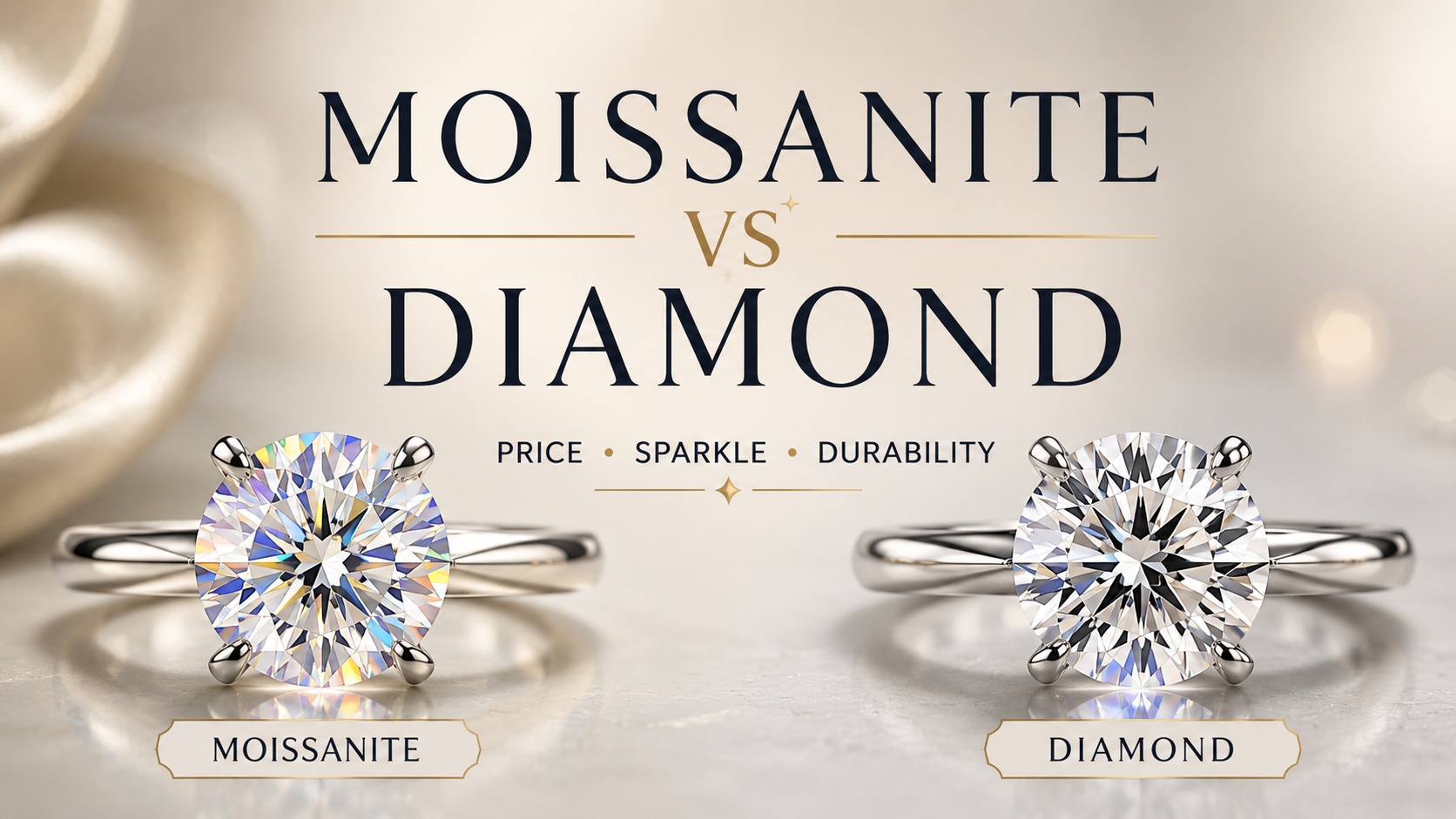
Moissanite vs Diamond: Price, Sparkle, Durability & Key Differences
When choosing an engagement ring or fine jewelry, many buyers compare moissanite vs diamond